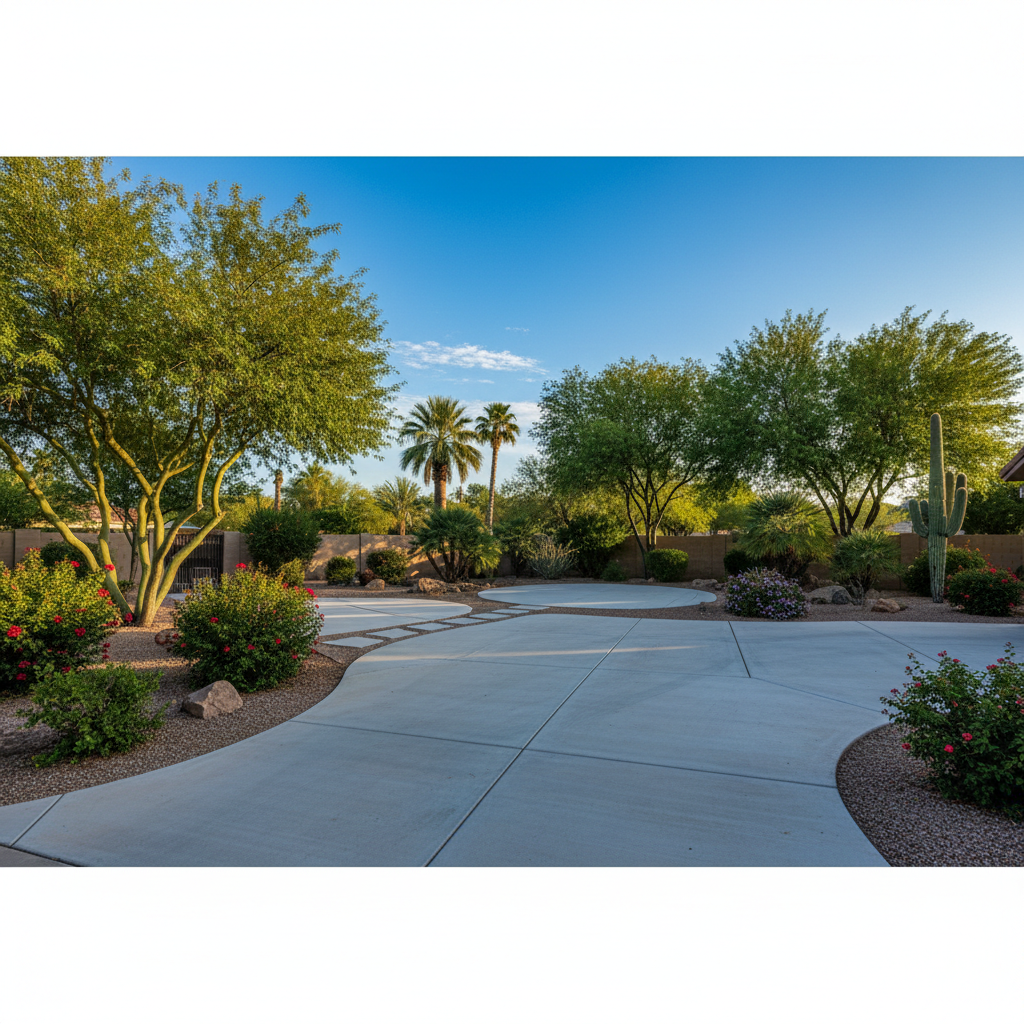
Planning Your Concrete Flatwork Project in Glendale, AZ
So, you're thinking about a new concrete driveway, patio, or walkway here in Glendale? That's awesome! Concrete flatwork can really boost your home's curb appeal and make it more functional. But before you get too excited about that fresh, smooth surface, let's talk about what actually goes into a project like this. It's not just about pouring concrete, you know; there's a whole process you need to understand to make sure everything goes smoothly and you get exactly what you're hoping for.
I've been doing this for a long time here in the Valley, and believe me, I've seen it all. From folks who thought it'd be a quick weekend DIY job to those who hired the cheapest guy they could find and ended up with a real mess. You definitely don't want to be either of those. Planning is absolutely key, especially with our intense Arizona sun and the expansive clay soils we often deal with in areas like the northern parts of Glendale.
The Timeline: What to Expect
Let's be real, you're probably wondering, "How long is this going to take?" That's a fair question. The answer isn't always simple, but I can give you a good idea of the stages involved.
- Initial Contact & Quote (1-2 weeks): First off, you'll reach out to a few contractors. We'll come out, take measurements, chat about your vision, and then give you a detailed quote. Good contractors are busy, so don't expect someone to show up the same day you call, alright?
- Scheduling (2-4 weeks out, sometimes more): Once you pick a contractor and sign a contract, you'll get on their schedule. Depending on the time of year and how swamped we are, this could be a few weeks to over a month out. We're not just sitting around waiting for calls, after all.
- Permits (If needed, 2-6 weeks): For some projects, especially bigger ones or those that impact public right-of-way (like a driveway apron), you might need a permit from the city of Glendale. Your contractor should handle this, but it does add time.
- Project Execution (1 day to 1 week): This is when the actual work happens. Small patios or walkways might be a day or two. A large driveway with extensive demolition and prep work, though, could easily take several days.
- Curing (7-28 days): After we pour, the concrete needs to cure. You can usually walk on it in 24-48 hours, but you shouldn't drive on it for at least 7 days – and ideally 28 days for full strength. This isn't "project time" in the traditional sense, but it's super important for how long it lasts.
So, from your first call to being able to fully use your new concrete, you're looking at anywhere from a month to three months. Patience really is a virtue here.
What Happens During the Process?
When we're actually on site, here's the general flow you can expect:
- Demolition & Removal: If you've got old concrete or other material there, we'll break it up and haul it away. This can get noisy and dusty.
- Grading & Sub-base Prep: This step is super important. We'll make sure the ground is properly sloped for drainage and compacted. We might bring in a layer of aggregate (like gravel) to create a stable base. This helps prevent cracking down the line.
- Forming: We'll set up forms, usually wood or metal, to create the exact shape and dimensions of your new concrete slab.
- Reinforcement: Depending on the project, we'll lay down rebar or wire mesh. This gives the concrete tensile strength and helps prevent cracking.
- Pouring & Finishing: The concrete truck arrives, and we pour. Then, the real artistry begins as we float, trowel, and broom the surface to get the desired finish. This is where experience really shows.
- Cutting Control Joints: Within 24 hours, we'll cut control joints into the concrete. These aren't cracks; they're intentional weak points that encourage any future cracking to happen along these lines, keeping your slab looking good.
- Curing: We'll apply a curing compound or advise you on how to keep the concrete moist, which is vital for strength.
How to Prepare Your Property
You've got a role to play too! Here's how you can make things easier for everyone:
- Clear the Area: Move any patio furniture, planters, grills, or anything else out of the work zone. We need clear access, plain and simple.
- Trim Landscaping: If you have bushes or trees hanging over the work area, trim them back. This protects your plants and gives us room to work.
- Ensure Access: Make sure there's a clear path for our equipment and the concrete truck. If we need to get a bobcat into your backyard, think about gate widths.
- Secure Pets: Keep your furry friends safely indoors or in a secure part of the yard away from the noise and activity.
- Talk to Your Neighbors: Give them a heads-up about the work, especially if it involves noise or temporary disruptions like a concrete truck blocking part of the street.
- Mark Sprinkler Lines/Utilities: If you know where underground sprinkler lines, low-voltage lighting, or other shallow utilities are, mark them. We'll try our best, but knowing exactly where they are helps avoid accidental damage.
Questions to Ask Before You Sign
Don't be shy! This is your investment, after all. Here are some key questions I recommend you ask any contractor, including us at Glendale Concrete Group:
- What's your experience with projects like mine here in Glendale? You want someone who understands our local conditions.
- Are you licensed and insured? Always ask for proof. A reputable contractor will be happy to provide it.
- Can you provide references? And actually call them!
- What type of concrete mix will you use? Ask about the PSI (pounds per square inch) rating. For driveways, you typically want 3000-4000 PSI.
- How will you prepare the sub-base? This is critical for longevity.
- What kind of reinforcement will you use (rebar, wire mesh, fiber mesh)?
- What's your plan for drainage? You don't want water pooling on your new surface or against your house.
- What's included in the price? Demolition, haul-away, materials, labor, permits, cleanup – make sure it's all spelled out.
- What's your warranty? A good contractor stands behind their work.
- What's the payment schedule? Be wary of anyone asking for a huge upfront deposit.
- How do you handle unforeseen issues? Sometimes things come up, like hitting an unexpected utility line. You need to know how they'll communicate and resolve it.
Asking these questions will help you feel confident in your choice and ensure you're working with a professional. A concrete flatwork project is a significant investment in your home, and with proper planning and the right team, you'll enjoy your new space for decades to come.