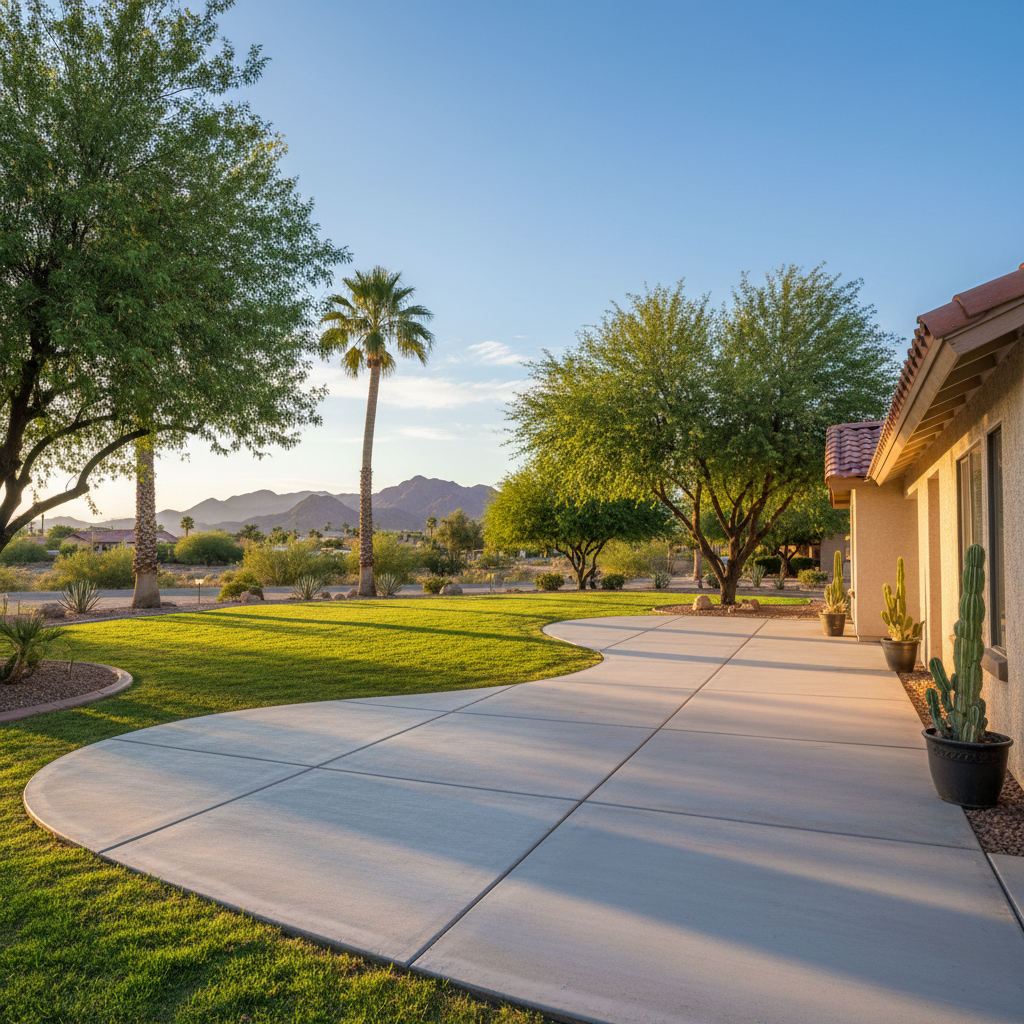
Alright, let's cut to the chase. You're probably thinking about new concrete around your place here in Glendale — maybe a new patio, a walkway, or finally fixing up that cracked driveway. Good move. But here's the thing: when you actually do the work matters, big time. Our Arizona weather isn't just hot; it's a whole beast, and it directly impacts how well your concrete sets up and, ultimately, how long it lasts.
When's the Best Time to Pour Concrete in Glendale?
Honestly, it's a bit of a Goldilocks situation. You don't want it too hot, and you definitely don't want it too cold. For us here in Glendale, the sweet spot for pouring concrete is usually in the spring or fall. Think March through May, or October through early December. Why those times?
Spring (March-May): The temperatures are usually just right. We're talking daytime highs in the 70s and 80s, with nights that don't dip too low. This lets the concrete cure slowly and evenly, which is exactly what you want for strength and durability. It also helps keep those annoying cracks from showing up because of rapid drying.
Fall (October-early December): Pretty similar to spring, the temperatures are moderate. The brutal summer heat has finally backed off, but we're not yet dealing with the occasional chilly winter nights. Again, slow, steady curing is the name of the game here.
Now, can we pour in the summer? Sure, we do it. But it's tougher. The extreme heat means we have to take extra precautions, like pouring in the early morning hours, using retarders in the mix, and diligently keeping the concrete moist for longer. It's more challenging, and frankly, it puts more stress on the material right from the start. What about winter? We can pour then too, but you run the risk of colder nights slowing the cure too much or even freezing, which is a big no-no for fresh concrete. We'll often use accelerators or blankets if we absolutely have to pour in colder temperatures.
Weather Conditions That Really Matter
It's not just the temperature outside; a few other things play a huge role:
Temperature: I already hit on this, but it's the biggest one. The ideal range for pouring is generally between 50°F and 90°F. Outside that, we're really fighting Mother Nature.
Humidity: Low humidity, like what we get a lot of here, means concrete can dry out too quickly. This leads to surface cracking, which we call 'plastic shrinkage cracks.' We combat this by keeping the surface wet and using special curing compounds.
Wind: A strong breeze might feel nice on a hot day, but it's terrible for fresh concrete. Wind speeds up evaporation, causing that rapid surface drying I just mentioned. We'll often put up windbreaks if it's really blustery out.
Rain: Obvious, right? You absolutely don't want rain on fresh concrete. It can wash out the cement paste, weaken the surface, and leave unsightly marks. We watch the forecast like hawks. If there's a chance of rain, we'll reschedule or make sure we have coverings ready to go.
Sun Exposure: Direct, intense sunlight, especially in the afternoon, can heat up the concrete too fast. This is why we often start pours super early in the summer, or use temporary shading to protect the work.
Protecting Your Concrete Investment Year-Round
Once your concrete is in and cured, you're not entirely off the hook, especially with our Glendale climate. Here's what you need to keep in mind:
Curing is Key: For the first week or so after a pour, keep that concrete moist. We'll apply a curing compound, but sometimes you'll need to lightly mist it with water yourself, especially during hot, dry spells. This step is crucial for gaining full strength, believe me.
Sealing: This is non-negotiable in Arizona. A good quality sealer protects against our intense UV rays, prevents staining, and helps repel water. You'll want to reapply it every few years, depending on the traffic and type of sealer you chose. Think of it like sunscreen for your concrete.
Expansion Joints: You'll notice cuts or strips in your concrete. These aren't just for looks, you know. They're called expansion joints, and they're there to control where the concrete cracks as it expands and contracts with our wild temperature swings. Don't let them get filled with dirt or debris; keep them clean.
Water Management: Make sure water drains away from your concrete surfaces, not towards them. Our monsoon rains can be heavy, and standing water can undermine the base over time or even cause issues with freeze-thaw cycles if we get a rare cold snap.
Clean Regularly: A simple sweep and occasional wash with a hose will keep your concrete looking good. For tougher stains, use a mild detergent and a stiff brush. Just avoid harsh chemicals that can degrade the sealer or surface over time.
Look, getting concrete poured is an investment. You want it to last. Here at Glendale Concrete Group, we've been doing this for a long time, and we know what our local conditions demand. We don't just pour concrete; we pour it right, considering every aspect of our unique desert environment. If you're planning a project, give us a call. We'll talk through the best timing and what we'll do to make sure your concrete stands strong for years to come.