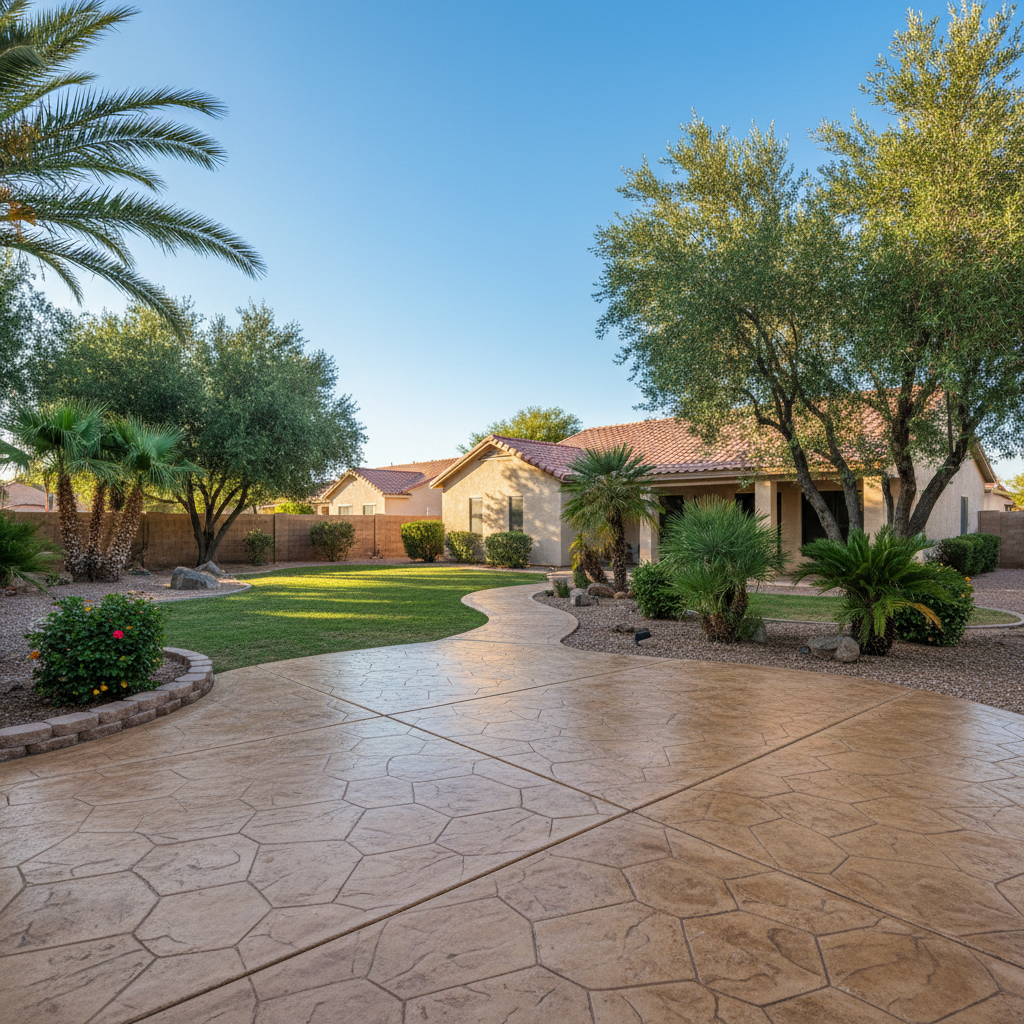
Ever watch a fresh slab of concrete dry out too fast under a brutal 115-degree Valley sun? If you live around Glendale, you already know our desert climate does not cut contractors or homeowners any slack. Concrete does not just dry; it cures through a chemical process that needs moisture and steady temperatures. When you throw intense heat, low humidity, and sudden monsoon downpours into the mix, timing your project becomes very important. Here is how we handle local weather patterns at Glendale Concrete Group to make sure your flatwork does not crack up before summer even hits.
The Sweet Spots for Scheduling Your Project
Nobody wants to deal with major outdoor construction when it is freezing, but our summer heat is actually the real enemy of fresh concrete. When ambient temperatures soar, water evaporates from the mix far too fast. That rapid moisture loss leads directly to shrinkage cracks and weak surfaces.
- Fall and spring offer the most forgiving windows for new installations, featuring mild days that let the mix cure at a proper, steady rate.
- Winter mornings in neighborhoods like Arrowhead Ranch provide surprisingly great working conditions once overnight lows settle down.
- Summer pours are not totally off-limits, but they demand crack-prevention strategies like starting before dawn and using specialized evaporation retarders.
Beating the Desert Elements During Installation
If you are pouring concrete during our scorching months, standard procedures will not cut it. A good crew has to adjust on the fly. We keep a close eye on wind and humidity because dry desert air sucks the moisture right out of wet mud in minutes. If the surface dries before the core gains strength, structural failure happens down the road. Glendale Concrete Group often uses specific admixtures and prompt wet-curing techniques to keep that hydration process moving. Monsoon season brings its own headaches with sudden flash floods and high humidity, meaning we watch the radar just as closely as the trowels.
Protecting Your Investment Year-Round
Once your new patio or driveway is down, the job is not completely finished. Glendale's intense UV rays are brutal on surface sealers. While homeowners in milder climates might go five years between seal coats, you will want to plan on resealing your concrete every couple of years out here to lock out moisture and prevent dusting. Keep debris swept off, wash away stubborn dirt before it bakes in, and address hairline cracks with a quality sealer early on before our seasonal temperature swings turn them into major eyesores. Smart timing and basic upkeep will keep your concrete looking solid for 15 to 20 years or more.