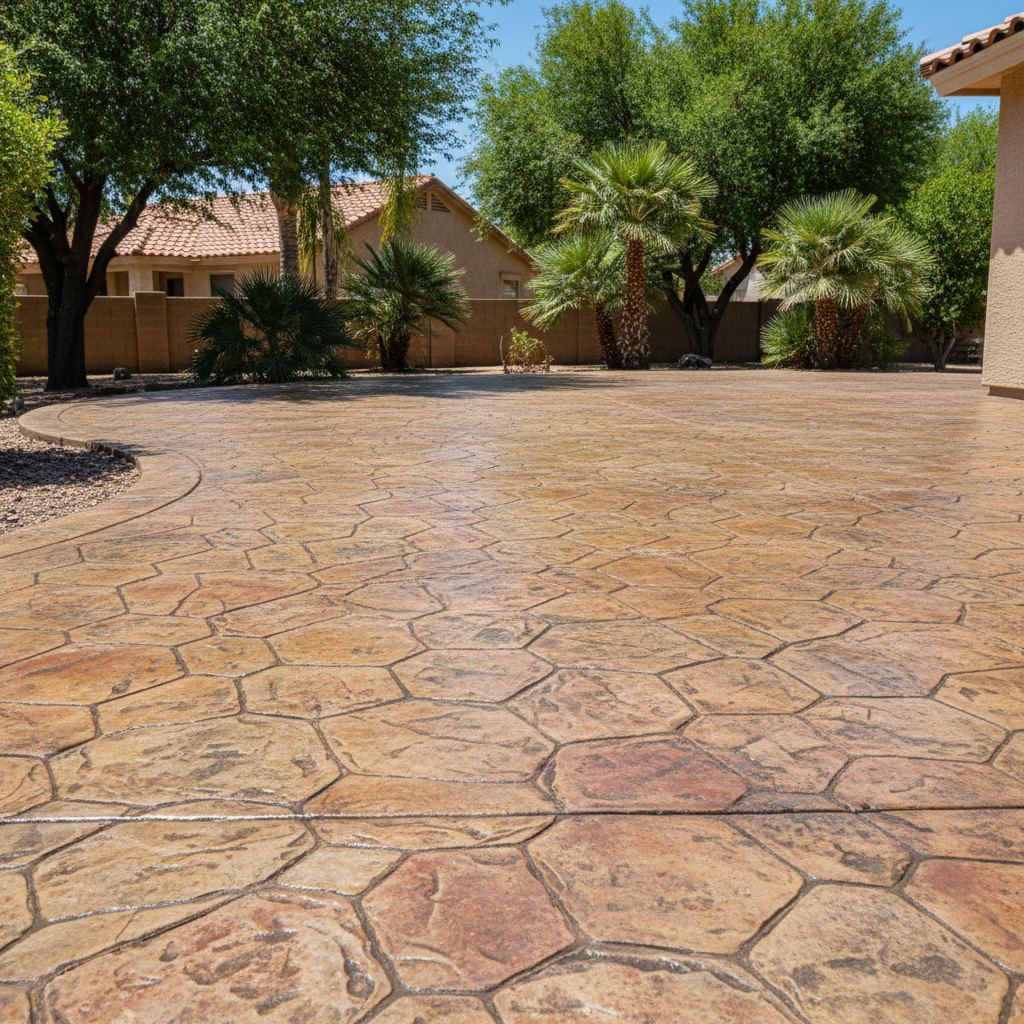
So, you put in stamped concrete, right? Maybe it’s your patio, a walkway, or even your driveway. It looks fantastic, adds a ton of personality, and honestly, it’s a really good upgrade for any home here in Glendale. But like anything else built to last, it’s not exactly a "set it and forget it" deal. Especially not with our crazy Arizona weather.
I've seen lots of stamped concrete jobs around here, from the newer places in the Arrowhead Ranch area to older homes closer to downtown. The ones that still look amazing years later? They've had some basic upkeep. The ones that don't? Well, they usually just needed a little more attention, that's all.
Making Your Stamped Concrete Last in Our Desert Climate
The biggest problem for stamped concrete here in Glendale isn't usually heavy foot traffic; it's the sun and the heat. That intense UV radiation and the constant heating and cooling can really mess with the sealer. And that sealer, by the way, is your concrete's main protection. So, what’s the secret to making it last?
- Seal it properly, and do it often: This is probably the most important thing you can do. A good, UV-resistant acrylic sealer keeps your stamped concrete from fading, staining, and just general wear. Most manufacturers suggest resealing every 2-3 years. But honestly, with our sun, you might want to think about doing it every 1-2 years for high-traffic spots or areas that get full sun all day. If your concrete looks dull, faded, or starts soaking up water instead of beading it, it's definitely time to reseal.
- Clean up spills fast: Oils, grease, rust, even some chemicals from fertilizers can stain your concrete if they sit too long. This is especially true if your sealer is getting thin. Don't let them soak in.
- Stay away from harsh chemicals: Stick to mild detergents or cleaners made specifically for concrete. Bleach, strong acids, or abrasive cleaners can strip the sealer right off and even damage the concrete surface itself.
Regular Maintenance: It’s Easier Than You Think
You don't need a fancy crew or special tools for everyday care. Most of it is just common sense and a little bit of effort.
- Sweep or blow off debris: Leaves, dirt, sand, and other stuff can be abrasive, particularly when people walk on it. A quick sweep or a pass with a leaf blower once a week or so keeps the surface clear and stops scratches.
- Hose it down: A good rinse with a garden hose can get rid of most surface dirt. For tougher grime, a mild detergent and a soft-bristle brush usually do the trick. Just make sure you rinse it really well afterward.
- Pressure washing (be careful!): If you've got some stubborn dirt, a pressure washer can work. But here’s the catch: use a wide tip (like a 40-degree fan tip) and keep the pressure under 1500-2000 PSI. Don't hold it too close to the surface, and absolutely do not use a concentrated stream. You can actually etch or damage the sealer and even the concrete itself if you're too aggressive.
- Watch for weeds: Weeds just love to pop up in cracks. Pull them out as soon as you spot them. If they get established, their roots can widen existing cracks or even make new ones.
Signs of Trouble to Look For
You're out there enjoying your backyard, maybe grilling some burgers, and you notice something's not quite right with your stamped concrete. What should you be keeping an eye out for?
- Fading or dullness: If your vibrant color starts looking washed out, or the whole surface just seems 'flat,' your sealer is probably failing. This is your signal to reseal before bigger problems start.
- Flaking or peeling sealer: This is a clear sign the sealer has reached its end or wasn't put on correctly in the first place. You'll see little bits of the clear coat coming off, sometimes in sheets.
- Cracks: Small hairline cracks are pretty common in concrete, especially with our temperature swings. But if you see cracks getting wider, or if they're more than a quarter-inch wide, that's a bigger issue.
- Pitting or spalling: These are small holes or chips in the surface. Freeze-thaw cycles can cause them (not a huge problem here, but it happens occasionally on rare cold nights if water sits). De-icing salts can also cause them (which, by the way, you shouldn't be using on concrete). More often, it's just general wear and tear or poor quality concrete.
- Stains that won't come out: If you've tried cleaning a stain with mild soap and water and it's still there, it means it's gotten past the sealer and possibly into the concrete itself.
When to Call a Pro
Look, for most of the stuff I just talked about, you can handle it yourself. But sometimes, it's just better to bring in the professionals. That's where Glendale Concrete Group comes in, you know?
- Major cracking or structural damage: If you've got big cracks, uneven sections, or areas that are sinking, that's way beyond a DIY fix. We can figure out the underlying cause and suggest the right repair.
- Extensive sealer failure: If your sealer is flaking or peeling everywhere, you might need to strip the old sealer completely before putting on a new one. That's a messy, time-consuming job that's best left to someone with the right equipment and experience.
- Deep, stubborn stains: Some stains need specialized cleaning agents or techniques that aren't easy for homeowners to get their hands on.
- You just don't have the time or tools: Hey, I totally get it. Life gets busy. If you'd rather spend your weekend enjoying your patio than working on it, give us a call. We're happy to help keep your stamped concrete looking its best.
Taking care of your stamped concrete isn't rocket science, but a little effort really makes a difference, especially in our desert environment. Keep an eye on it, give it a clean every now and then, and reseal when it needs it. You'll enjoy that beautiful surface for years to come.