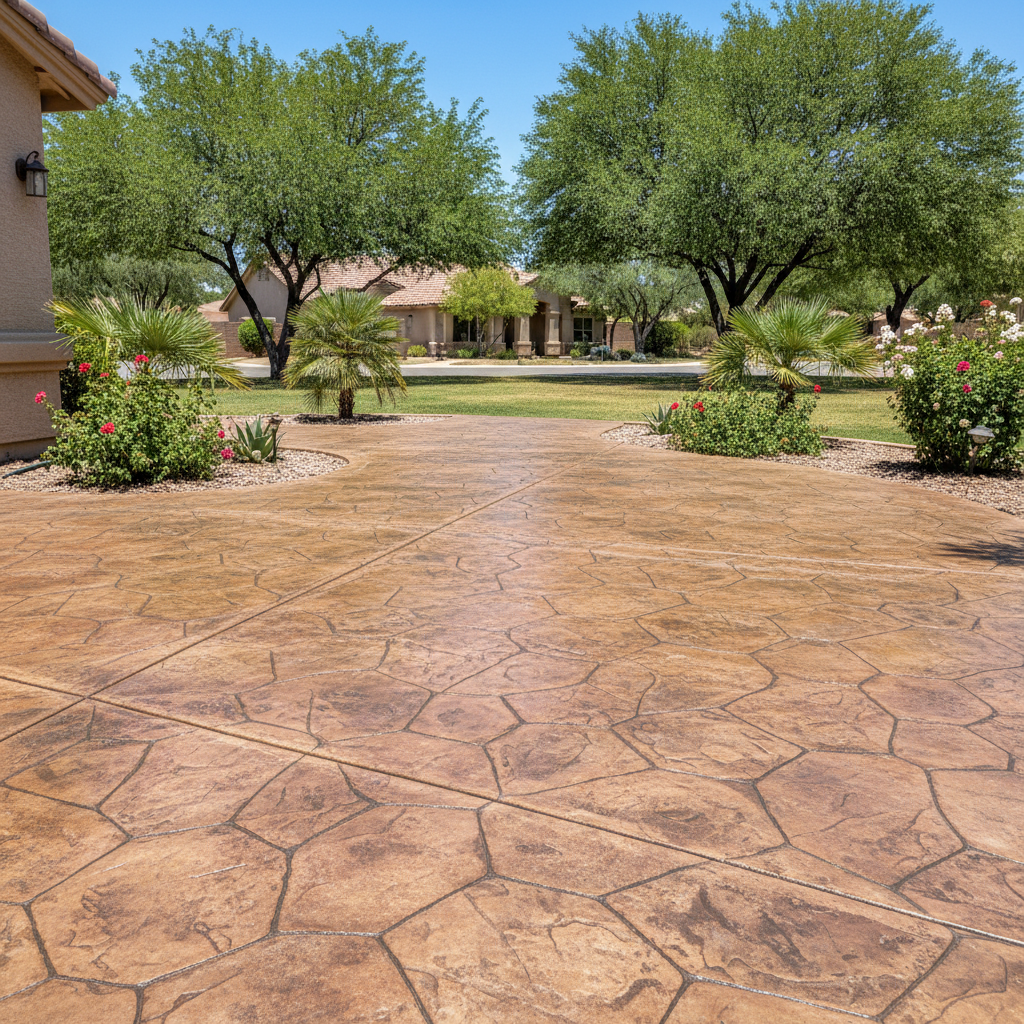
Your Stamped Concrete Needs a Little Love, Especially Here
You shelled out for stamped concrete, right? Good choice. It really does add curb appeal and can totally transform a backyard. But it ain't set-it-and-forget-it, not with our Arizona sun beating down on it year-round. You want that investment to last, and I'm here to tell you how to make sure it does.
Think of it like your car needing oil changes, or your AC needing filter swaps. Your stamped concrete needs some regular care to stay looking sharp and hold up against our intense heat, monsoon rains, and even the occasional dust storm that rolls through neighborhoods like Arrowhead Ranch. Neglect it, and you'll see it fade, crack, or just look plain tired. Nobody wants that, do they?
Regular Maintenance: Your Best Defense
This isn't rocket science, but being consistent is key. Here's what you should be doing:
- Keep it Clean: Sounds obvious, I know, but it's crucial. Sweep off leaves, dirt, and any other debris regularly. For a deeper clean, a good rinse with a garden hose and a mild soap (like dish soap) works wonders. Use a soft brush for any stubborn spots. Just make sure to avoid harsh chemicals or anything abrasive that could strip the sealer or damage the surface. I've actually seen folks go at it with a power washer on full blast, and that's a surefire way to ruin your sealer and even etch the concrete if you're not careful. If you do use a power washer, keep it on a low setting and use a wide spray nozzle.
- Re-seal Every Few Years: This is probably the most important step for extending the life of your stamped concrete, especially in our climate. The sealer is what protects the color, prevents staining, and keeps moisture out. Our sun is brutal, and it breaks down sealers faster than you'd think. Most manufacturers recommend re-sealing every 2-3 years, but honestly, here in Glendale, I'd lean closer to every 1-2 years for high-traffic areas or spots with constant sun exposure. You'll know it's time when the surface starts to look dull, or water doesn't bead up on it anymore.
- Address Stains Quickly: Spills happen. Oil from the grill, a dropped popsicle, pet accidents. The quicker you clean them up, the less likely they are to set in. For oil, kitty litter or sawdust can absorb it before you clean. For other stains, mild soap and water usually do the trick.
- Watch for Weeds: Weeds love to sprout in any tiny crack or joint. Pull them out by hand or use a targeted weed killer. Don't let them get established; their roots can cause bigger problems down the line.
Warning Signs: Don't Ignore These
Your concrete will tell you when it's unhappy. Pay attention to these red flags:
- Fading Color: If your beautiful browns or grays are starting to look washed out, your sealer is likely failing, and the sun is getting to the pigment. This is a big sign it's time to re-seal.
- Flaking or Peeling Sealer: This looks like the top layer is coming off in patches. It usually means the sealer wasn't applied correctly, or maybe there was moisture trapped underneath. You'll need to strip the old sealer and reapply.
- Hairline Cracks: A few tiny, superficial cracks aren't always a disaster, especially with our expansive clay soils here that can shift a bit. But if they start to widen, lengthen, or you see new ones appearing rapidly, it could indicate a bigger issue with the sub-base or an expansion joint problem.
- Pitting or Spalling: This is when small pieces of the concrete surface break away, leaving little craters. It's often due to freeze-thaw cycles (not a huge issue here, but can happen with trapped moisture) or poor quality concrete.
- White Haze (Efflorescence): Sometimes you'll see a white, powdery residue on the surface. This is salts coming up from within the concrete. It's usually harmless but can be unsightly. A good cleaning and ensuring proper drainage can help.
When to Call a Pro (Like Us)
Look, I'm all for DIY, but some things are best left to the experts. You should definitely call Glendale Concrete Group if:
- You've got significant cracking: Cracks wider than a credit card, or ones that are uneven, usually mean structural issues. We can assess if it's a simple repair or something more involved.
- Your sealer is failing badly: If it's flaking, peeling everywhere, or you've got a real mess on your hands, stripping and reapplying sealer correctly is a job that requires specific tools and know-how to avoid making it worse.
- You're seeing widespread pitting or spalling: This isn't just cosmetic; it can compromise the integrity of your concrete.
- You're just not sure: If something looks off and you can't figure it out, or you're worried about tackling a big maintenance job, give us a call. We'd rather you ask than try a fix that ends up costing you more in the long run. We've seen it all, and we can usually diagnose the problem pretty quickly.
Your stamped concrete is a beautiful addition to your home. A little bit of consistent care goes a long way in keeping it that way for decades, even in the Arizona heat.